



Precision Machinery Displacement Sensing and Precision Machinery Market Applications
Release Date:2025-05-14 Source: View count283
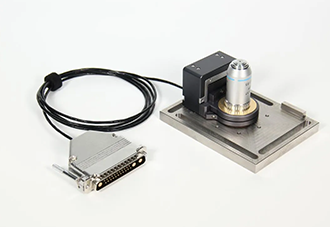
There is a great demand for precise displacement control in the closed-loop of nanopiezoelectric stations in semiconductor devices, biomedicine, precision optics, scanning microscopes, and other fields. In these applications, piezoelectric ceramics are often used for nanoscale displacement control, such as sample movement and precise focusing of lenses. Capacitive sensors can be used to measure small displacements, forming a closed-loop system and achieving position control with nanometer level displacement resolution.
During the high-speed operation of the astronomical telescope mirror splicing rocket engine, it is necessary to monitor the vibration of its shaft, identify faults in a timely manner, and take safety measures. Due to the large temperature variation range of the rocket engine shaft, sensors need to have excellent temperature stability to avoid failure to identify faults or false alarms caused by measurement errors in a timely manner.

The reflector of a large astronomical telescope is usually composed of multiple sub mirrors. Under outdoor environmental conditions, each sub mirror may undergo slight positional changes due to temperature changes, structural creep, and other factors. In addition, the orientation and focus of the mirror surface need to be adjusted according to observation requirements. In the above passive and active change processes, it is necessary to always maintain the edge alignment of each sub mirror, and the alignment accuracy needs to reach within tens of nanometers. Eddy current sensors are insensitive to humidity changes and are suitable for precise displacement measurement in outdoor environments. The use of high stability and high-resolution eddy current sensors as position feedback components for lens attitude adjustment can achieve nanometer level control accuracy and high-quality imaging.
There is a great demand for precise displacement control in the closed-loop of nanopiezoelectric stations in semiconductor devices, biomedicine, precision optics, scanning microscopes, and other fields. In these applications, piezoelectric ceramics are often used for nanoscale displacement control, such as sample movement and precise focusing of lenses. Capacitive sensors can be used to measure small displacements, forming a closed-loop system and achieving position control with nanometer level displacement resolution.
During the high-speed operation of the astronomical telescope mirror splicing rocket engine, it is necessary to monitor the vibration of its shaft, identify faults in a timely manner, and take safety measures. Due to the large temperature variation range of the rocket engine shaft, sensors need to have excellent temperature stability to avoid failure to identify faults or false alarms caused by measurement errors in a timely manner.
The reflector of a large astronomical telescope is usually composed of multiple sub mirrors. Under outdoor environmental conditions, each sub mirror may undergo slight positional changes due to temperature changes, structural creep, and other factors. In addition, the orientation and focus of the mirror surface need to be adjusted according to observation requirements. In the above passive and active change processes, it is necessary to always maintain the edge alignment of each sub mirror, and the alignment accuracy needs to reach within tens of nanometers. Eddy current sensors are insensitive to humidity changes and are suitable for precise displacement measurement in outdoor environments. The use of high stability and high-resolution eddy current sensors as position feedback components for lens attitude adjustment can achieve nanometer level control accuracy and high-quality imaging.
- Prev:none
- Next:none